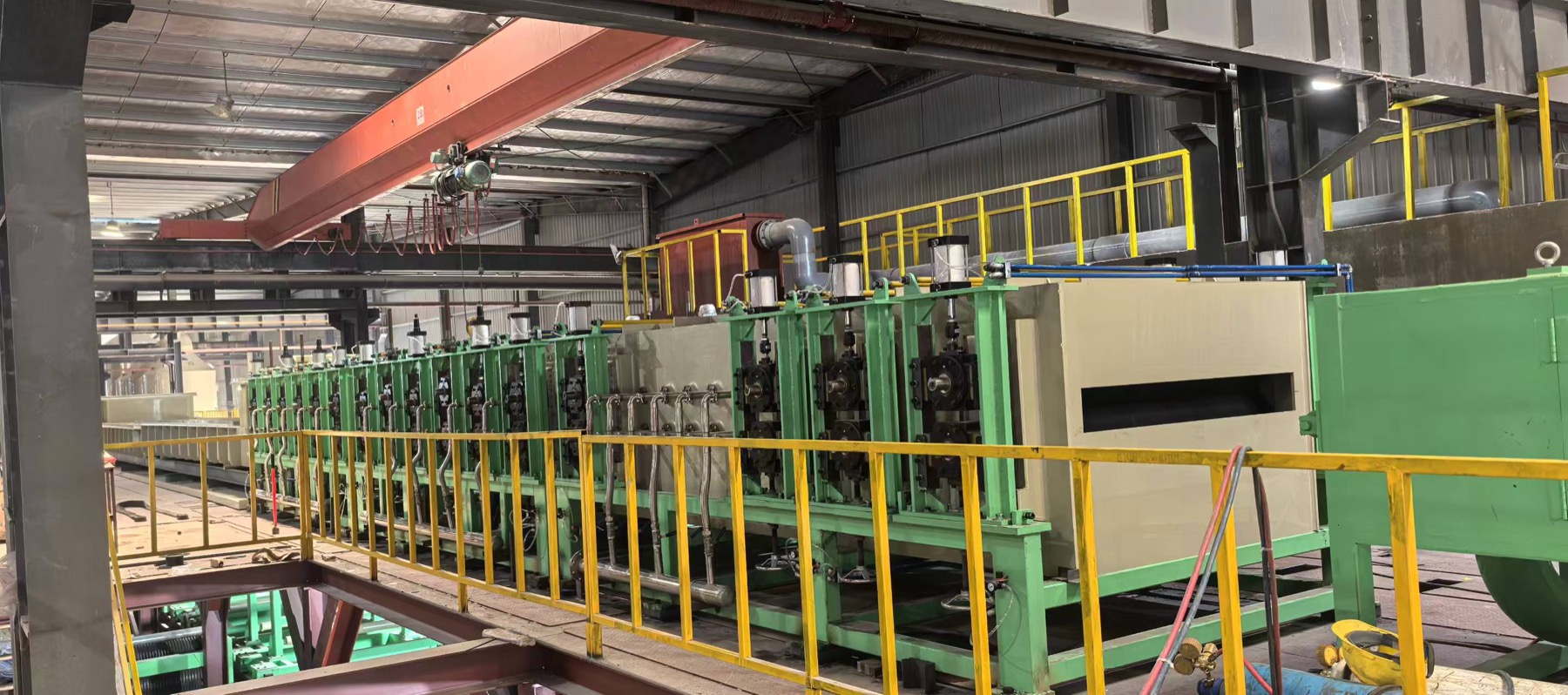
JINYE strip cleaning line workshop

Engineering Profile

Stainless steel strip equipment manufacturing shaped by real line conditions

Founded in 2021, JINYE focuses on rolling and finishing equipment for stainless steel strip plants, connecting line design, manufacturing, installation, commissioning and service into one project workflow.

Company Positioning

JINYE serves stainless steel strip producers with stainless steel rolling mills, strip cleaning lines, tension leveling lines and coil slitting lines. Each project starts with 201/304/316 grade, gauge range, strip width, coil weight, line speed, surface quality and plant utilities.

The goal is not only to meet a machine specification. The line must run steadily, protect stainless steel surface quality, support commissioning rhythm and leave room for process optimization after trial production.

Technical Focus

JINYE develops capabilities in stainless steel rolling, high-accuracy gauge control, energy-conscious drive systems, strip cleaning and drying, tension control, mirror finish preparation, precision slitting and automation integration.

Markets and Service

JINYE serves customers in China and export markets including Southeast Asia, Europe and the Middle East. For overseas projects, packing, installation conditions, spare parts, training and remote support are clarified early.

Capability Structure

Every project step should be backed by process data

Engineering

Define the process boundary first

Stainless steel grade, gauge, width, coil weight, speed and surface quality targets are used to define equipment capability.

Manufacturing

Manufacturing supports commissioning

Mechanical, hydraulic, electrical, safety and service-access details are coordinated before site work.

Service

Optimization continues after startup

Support covers installation, commissioning, trial production, operator training, spare parts and parameter tuning.

Confidentiality

Custom drawings, line layouts and process data are handled under project confidentiality rules

Confidentiality agreements can be signed when projects involve custom plant layouts, core component drawings, line process limits and owner-side production data.